
Best German Foods: 40 Dishes You Need to Try

Heading to Germany and wondering what delicious dish to sink your teeth into first? We are here to help!
I actually spent a lot of my childhood visiting relatives in Germany, which means that as an almost local, I know what I am talking about when it comes to good food.
I would even go as far as saying that trying certain foods is usually part of our travel itinerary! (I actually had a written list of foods I wanted to sample during our recent tour of the German Christmas Markets).
But enough about our food experiences – ready to start your own culinary adventure? Let’s dive in!
What Kind of Foods Will I Find on This List?
We have put together a list of some of the more traditional foods that are still eaten by Germans today.
Many of these dishes are popular with tourists, while others are more likely to be found on family dinner tables all through the country.

And just as a side note, I have actually tried all the foods listed here! While I may not live in Germany, I have spent enough time there to have sampled a variety of foods over the years!
Main Courses – Meat
Many of these meat dishes are popular in German restaurants all over the world. So even if you are not actually in Germany, you could give these dishes a try!
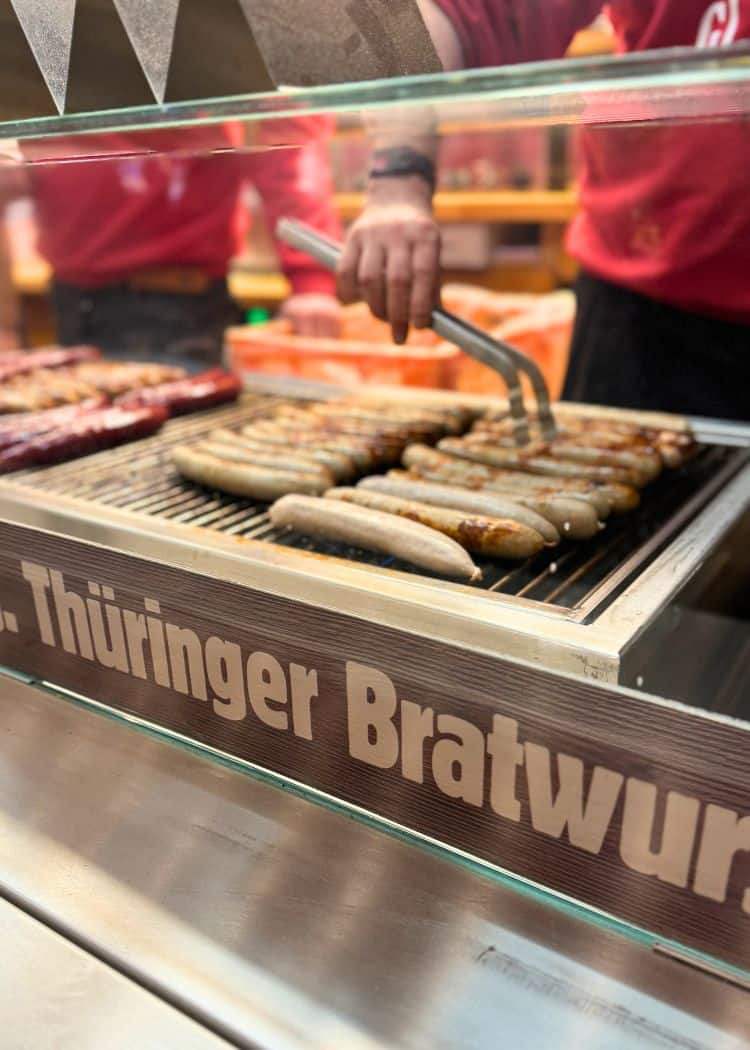
1. Bratwurst
Bratwurst is a cornerstone of German cuisine!
These pork or veal sausages are usually fried or grilled and are typically served in a bread roll, with potato salad or alongside some sauerkraut or onions.

Bratwurst is a fresh, linked sausage usually containing spices like ginger, nutmeg, coriander, or caraway.
With more than 40 different types of German bratwursts, you are bound to find one you love!
2. Leberkäse
Leberkäse is similar in texture and taste to bologna, but it’s often referred to as German meatloaf.
This traditional German dish is made from ground meat, such as corned beef, pork liver and bacon, and is flavoured with onions.
The Leberkässe is then baked into a meatloaf, producing a crispy crust on the outside, while the inside remains juicy and pink.
Leberkäse can be served either hot or cold and can be paired with sweet mustard and stuffed into a bread roll.
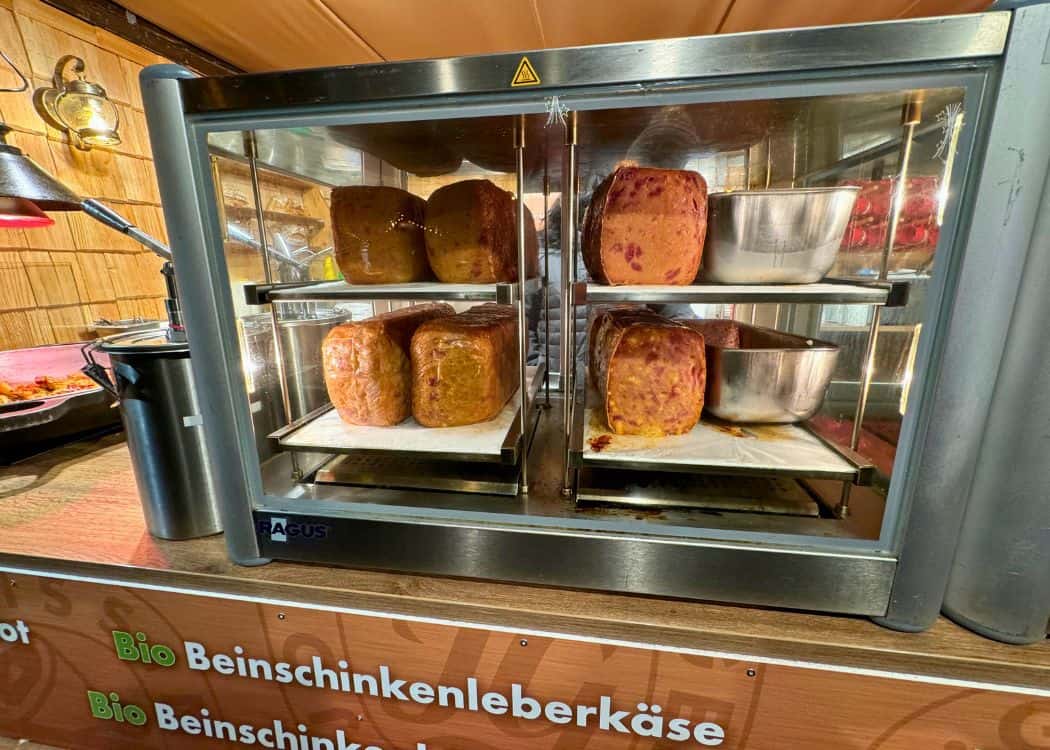
Similar to Spam, Germans also like to fry the slices of Leberkäse in a pan and consume it as a quick snack.
This was one dish that I absolutely did NOT enjoy! Described by locals as ‘meatloaf,’ Hubby and I were expecting North American meatloaf!
Instead, the Spam-like dish we were presented with, was quite salty, and not at all appealing to us! The kids, on the other hand, actually enjoyed it!
3. Schnitzel
In Germany, Schnitzel refers to a piece of tenderized meat (such as chicken, beef, veal, or pork), that is covered in egg, flour, and breadcrumbs, before frying it in oil.
Schnitzel is a staple of most traditional German restaurants.
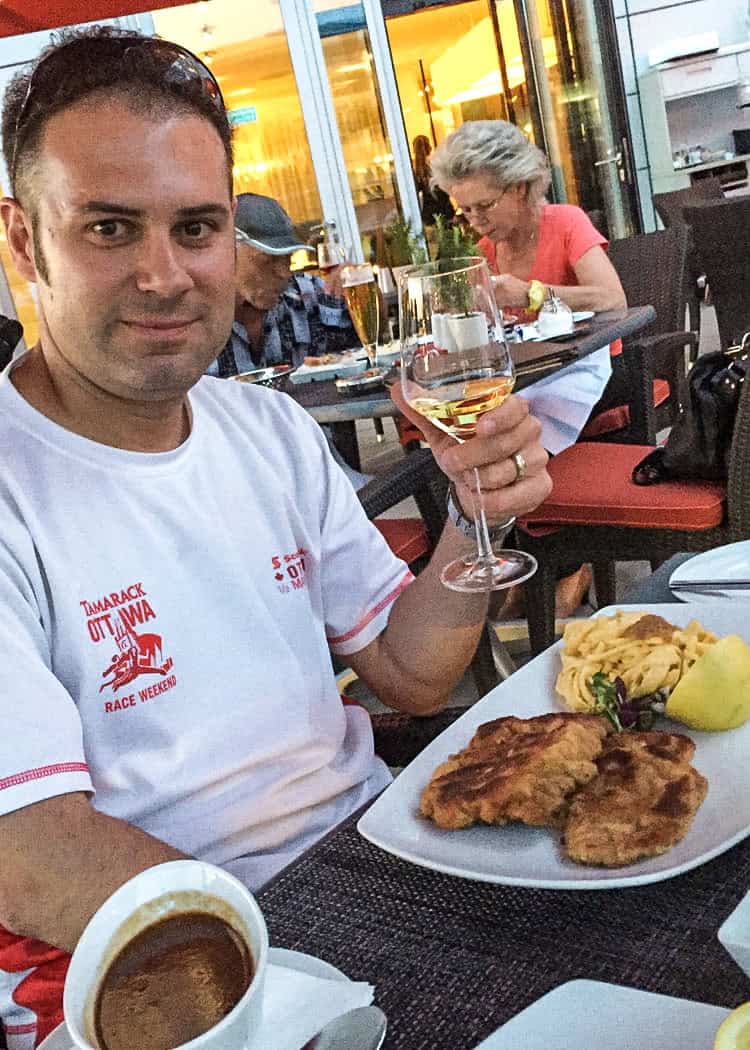
Traditional schnitzel is either served with a lemon wedge or comes laden with sauce. Spätzle or kartoffelsalad are typical accompaniments.
💡 Fun Fact: Wienerschnitzel is actually a geographically protected term in Germany and Austria, where the dish can only be made with veal.
Schnitzel is definitely popular, you can easily find this dish pretty much anywhere!
While we have enjoyed trying several variations, we all prefer the plain veal cutlet served with lemon (rather than sauce).
4. Goulash
Although originally from Hungary, Goulash can be found throughout Germany.
Goulash can be eaten like a stew, alongside a side dish like Spätzle.
This hearty dish is typically made with thick pieces of beef meat that have been slow-cooked in a rich red wine sauce.
Vegetables, potatoes, and spices like paprika are then added to the soft and tender meat.
5. Schweinshaxe
Schweinshaxe refers to a whole pork knuckle, that is roasted for hours until it is thoroughly cooked, and the skin becomes golden brown and crispy.
This dish is popular in the southern parts of Germany, particularly in Bavaria.
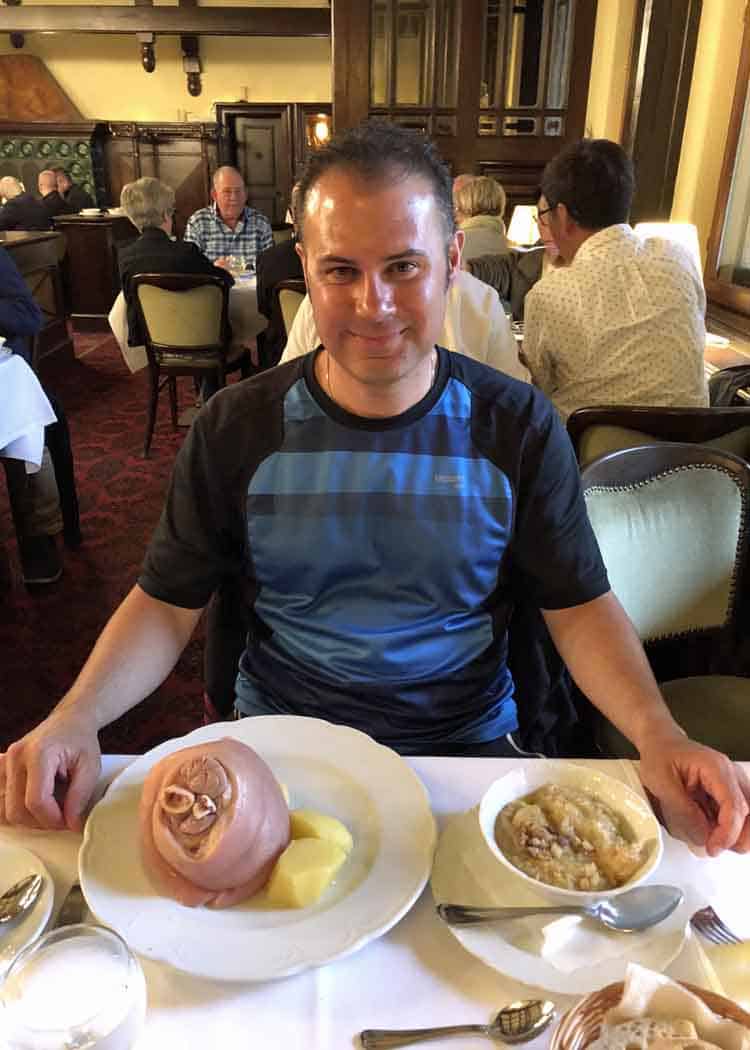
In the northern parts of Germany, the dish is referred to as Eisbein, and is cured or pickled, before it is boiled.
We tried both versions while touring Germany, and definitely preferred the Bavarian roasted version.
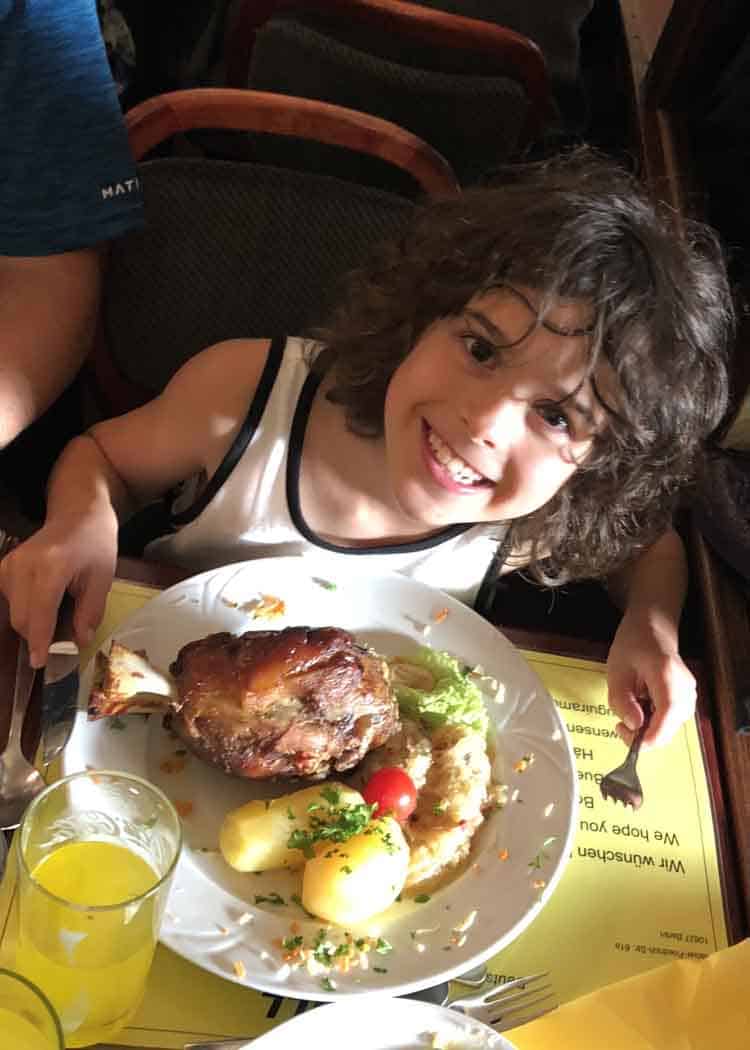
It is usually served with knödel (dumplings), a generous serving of sauerkraut, and a nice cold beer!
Pork knuckles are definitely a staple in traditional German cuisine, especially when it comes to Oktoberfest!
You would be hard-pressed to find a Bavarian Beer hall that did NOT have this delicious dish on its menu!
6. Rouladen
Rouladen is literally rolled meat.
This delicious blend of bacon, onions, mustard and pickles, wrapped together in thin sliced beef or veal, is usually served with gravy, potato dumplings, mashed potato and pickled red cabbage.
Rouladen is definitely one of those meals that is impressive enough to serve on special occasions but is also a staple of family dinners.
7. Sauerbraten
Sauerbraten is a classic German comfort food.
It literally translates to ‘sour roast,’ and is essentially a pot roast that’s slow-cooked and packed with flavour.
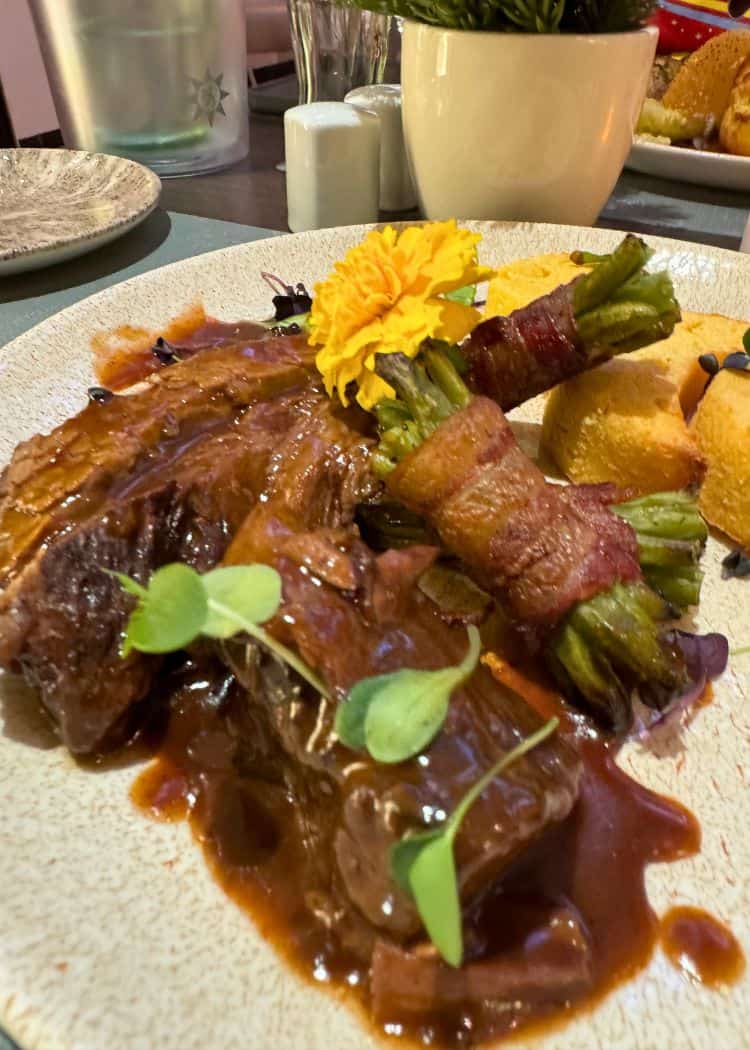
The sour part refers to the fact that the meat is marinated in a vinegar-based sauce, along with spices and seasonings, for days or even weeks.
The meat is then slow-roasted and usually served with noodles, dumplings, or potatoes.
8. Döner
Originally from Turkey, Döner Kebab is a common street food in Germany.
It features a pita packed full of rotisserie meat sliced off a vertical spit, lettuce, tomatoes, onions, and a garlicky yogurt sauce.
Rumour has it, that this dish is so popular in Germany, that there are actually more kebab stands in Berlin than there are in Istanbul!
True or not, they are delicious and a must-try when out in the city.
9. Knackwurst
Knockwurst is a short, fat sausage, that is usually made from ground pork and veal.
The sausage is pre-boiled, heavily seasoned with garlic, and tends to be on the fattier side.
The name comes from the word, knacken, which means “to crack”.
Unlike bratwurst and other similar sausages, knackwurst’s casing becomes extra crispy when heated.
This gives the Knackwurst a specific cracking sound when you cut into it.
Knackwurst is usually served with sauerkraut, potato salad, pickles, and mustard. A glass of cold German beer on the side is also a great option!
10. Weißwurst
Weisswurst, or white sausage, is a Bavarian breakfast staple.
These white-coloured sausages are made from minced veal and bacon and then seasoned with parsley, lemon, onions, ginger, and cardamom.
Weisswurst is cooked in water and then served in a bowl of warm water. The sausage casings are then removed prior to eating.
Weisswurst is traditionally eaten for breakfast, or a mid-morning snack, and is eaten with sweet mustard and pretzels (and maybe even a cold beer).
11. Herring
Germans LOVE their Herring!
Whether it’s eaten on its own or as part of a dish, you will find herring served in a variety of ways, and at all times of the day (YES, even at breakfast).
My Oma always had a jar of herring in the fridge when I was growing up.
And while I didn’t eat them then, I’d like to say that my adult palate is much more refined and open to new things!
One popular way to enjoy herring in Germany is as Matjes, which are young, tender herring fillets cured in a special brine.
🐟 Fun Fact: The word “Matjes” comes from Dutch and means “maiden.” It refers to young herrings that haven’t yet reproduced. These fish are soft and mild in taste. They are usually caught in the spring before they have a chance to mate.
These are typically served with onions and are often accompanied by a side of boiled potatoes or dark rye bread. They are also commonly served in a savoury cream sauce.
Another common preparation is Bismarck Herring (what Oma liked), which are pickled herring fillets.
They’re usually eaten cold, straight from the jar, or used as a topping on open-faced sandwiches.
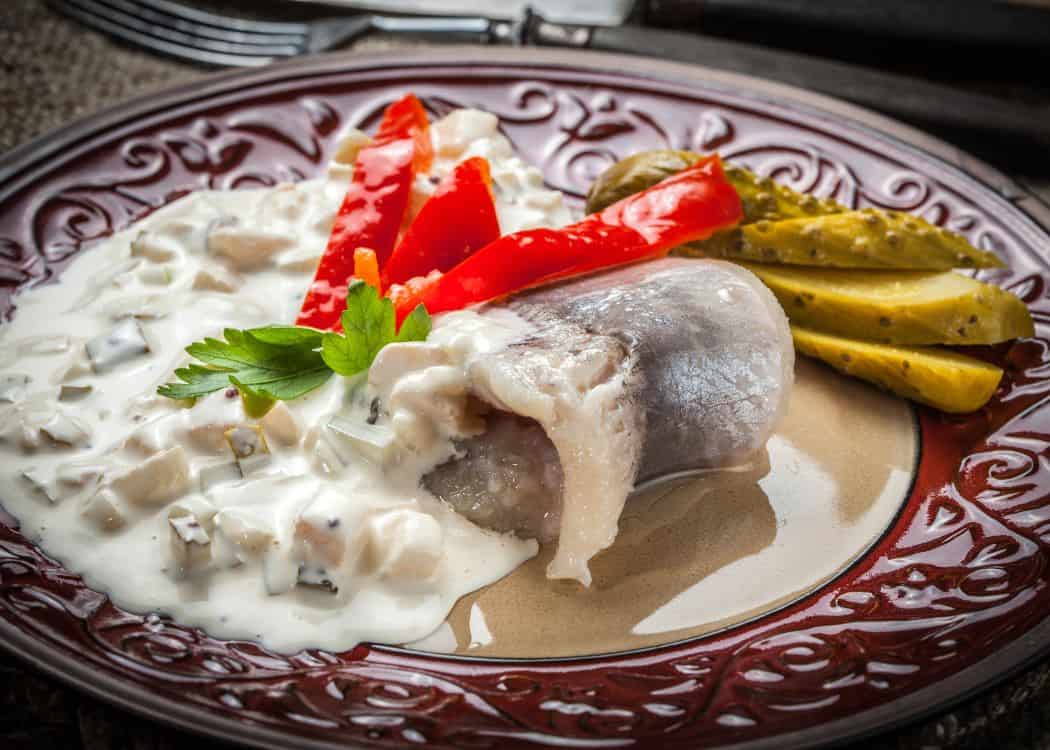
Herring Salad is another favourite. This dish mixes pieces of pickled herring with apples, onions, pickles, and a creamy white sauce.
Lastly, herring is also popular in smoked form, which is the way I like it.
It can be enjoyed either on its own or as part of a variety of dishes. Smoked herring is particularly good when accompanied by a cold (German) beer!
12. Mettwurst
Mettwurst is a type of German sausage made from raw minced pork which is then cured, smoked, or dried.
This process gives it a strong, distinctive flavour and a firm texture.
It’s similar to salami and can be found in various forms depending on the region in Germany.
While some are spreadable like a pâté, others are firmer and can be sliced.
Mettwurst is typically seasoned with garlic, salt, black pepper, and sometimes with spices like mustard seeds or coriander.
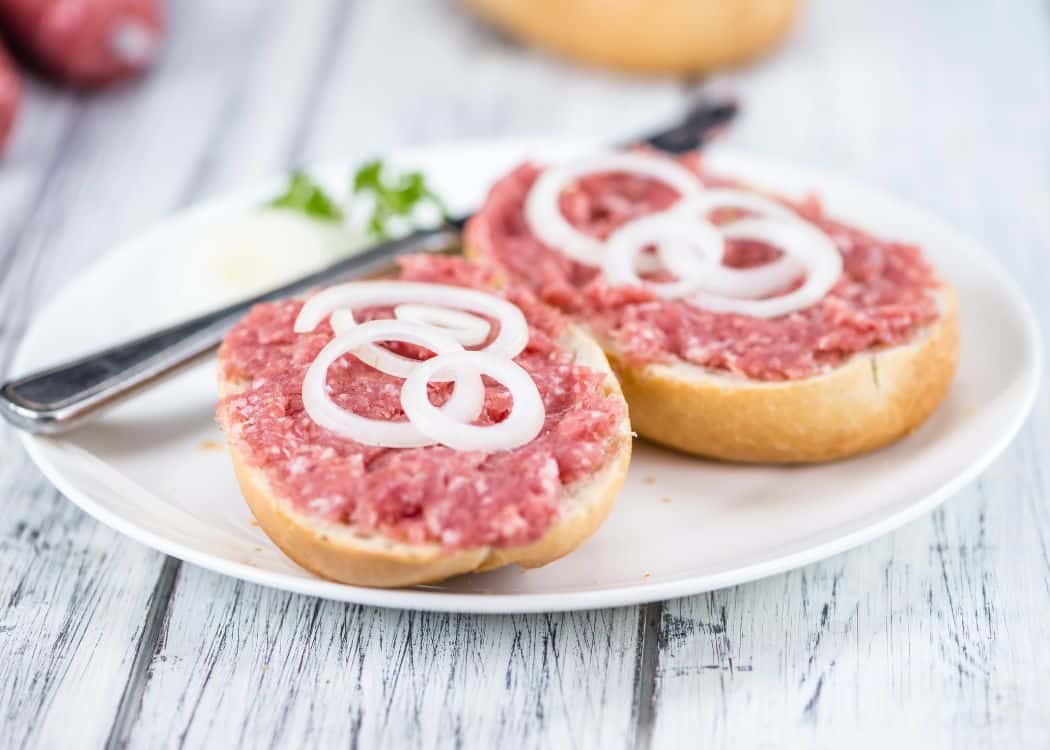
It’s a popular item in German cuisine, often eaten as part of a cold platter, spread on bread, or used as an ingredient in hearty dishes like stews and soups.
This is another German food that I just can’t get behind.
The versions I have seen literally look like someone has taken completely raw minced pork, and put it on a slice of bread with salt and pepper. Ick! 🤢🤢
All I can say is, to each his (or her) own.
Main Courses – Pasta
While different types of pasta are popular in Germany, don’t expect to find tomato sauce as an accompaniment!
13. Spätzle/Käsespätzle
Spätzle, or German Egg Noodles, are at the top of my list of the best German foods that you need to try!
To me, it is the ultimate comfort food and will always remind me of my Oma.
I have actually spent hours perfecting my Spätzle-making skills in the traditional, old-school way that she used to make them!
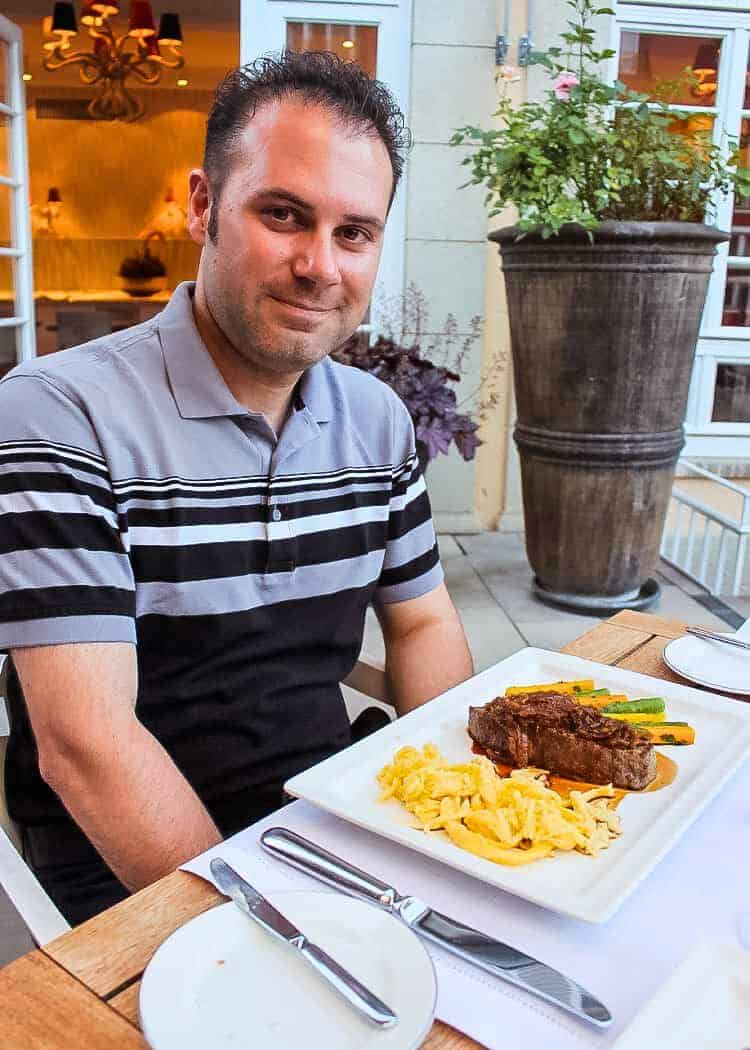
Originating from Baden-Württemberg, this Swabian dish is traditionally served as an accompaniment to meat dishes or added to soups to make them more hearty.
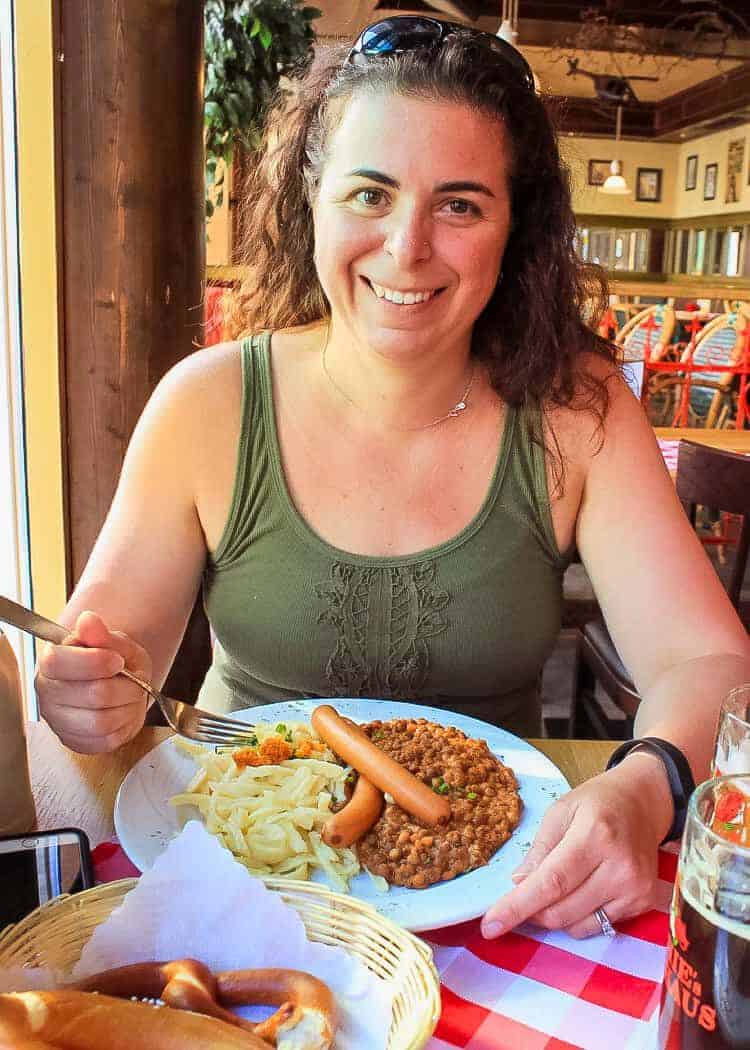
Spätzle can be eaten plain or with gravy. My favourite way to eat Spätzle is with linzen (lentils).
This was how my family served it, and how I make it for my kids.

We enjoyed sampling different versions of this comfort food, in various restaurants throughout Stuttgart.
Käsespätzle is the German version of macaroni and cheese.
It is made by layering Spätzle with grated cheese before topping it with fried onion.
The most common version of the dish uses Gruyère cheese, although Emmental or Swiss can also be substituted.
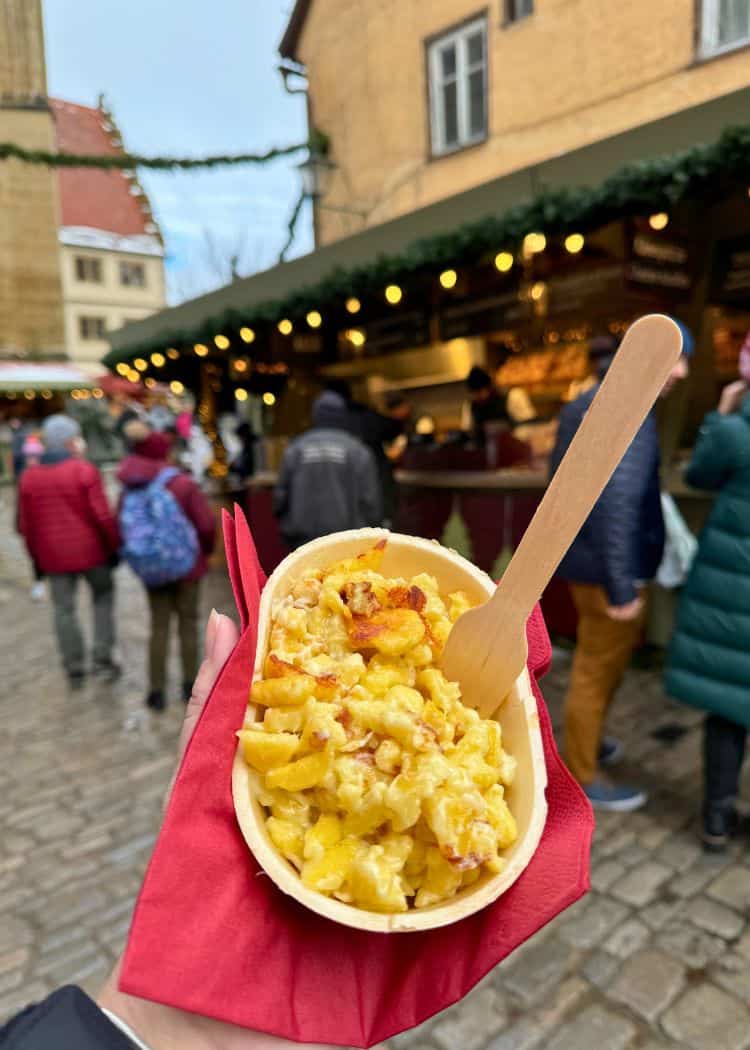
Käsespätzle is usually served with a salad, or applesauce, and is always a huge hit with our kids!
14. Maultaschen
Maultaschen is a larger version of ravioli.
Originally from Swabia in eastern Baden-Württemberg, these palm-sized square pockets of dough are definitely a comfort food for Germans.
Maultaschen can be sweet or savoury, and meaty or vegetarian.
The most traditional version of this pasta dish is a combination of minced meat, bread crumbs, onion and spinach all contained in a light dough.

Schwäbische Maultaschen is a hearty dish, ideal for cold winter months.
The pasta is usually prepared in one of three ways: sliced and fried with eggs, simmered in broth, or topped with onions and butter.
This is one of my favourite foods, on this list, perhaps because it is a perfect combination of my German/Italian heritage… but more likely because they are absolutely delicious!!
😮 Fun Fact – Maultaschen are said to have been created by monks in the Middle Ages, who wanted to hide meat during Lent by wrapping it in pasta dough
Main Courses – Miscellaneous
I just couldn’t figure out how to better organize this group of main courses!
15. Zwiebelkuchen
Zwiebelkuchen is a savoury onion pie that is pretty popular in Germany.
The dish starts with a thin, buttery crust that is usually made with a yeast-based dough. It is then traditionally baked in a round deep-dish pan.
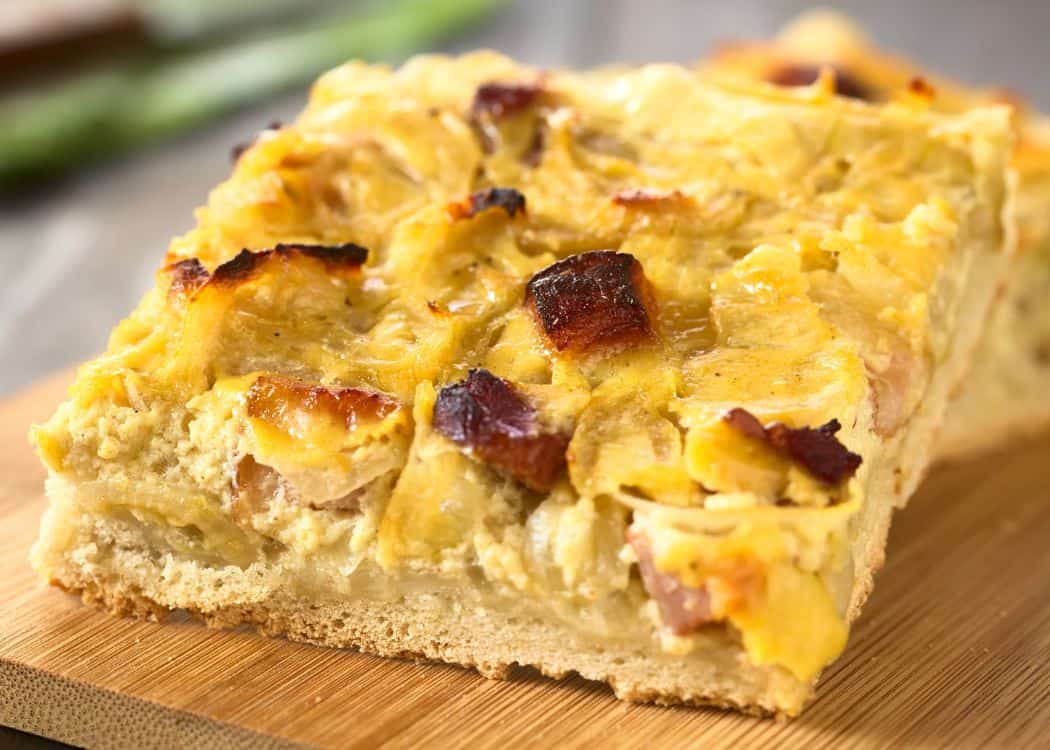
The pie is filled with a combination of caramelized onions, smoky bacon, and a creamy mixture of eggs and sour cream.
The Zwiebelkuchen is then seasoned with salt, pepper, and caraway seeds, giving the dish a deep and earthy flavour.
16. Grießbrei
Griessbrei is a traditional German hot cereal, most often eaten at breakfast time.
It is basically the North American equivalent of cream of wheat.
The dish is made with milk, semolina (durum wheat), and sugar.
The milk is heated, the semolina stirred in, and the mixture is then stirred until it becomes creamy and thick.
Griessbrei is then flavoured with vanilla and cinnamon and often served topped with fresh fruit.
I loved this dish as a kid and still make it for my breakfast today!
Side Dishes
While there is an endless list of side dishes, I have listed the most popular German ones here.
These are all items I have been offered either while eating at a restaurant, or while having dinner with family.
17. Pumpernickel
Germans love their bread! And Pumpernickel is probably the most German of all bread.
I loved visiting the bakeries in the morning, just to smell that heavenly aroma of freshly baked bread!
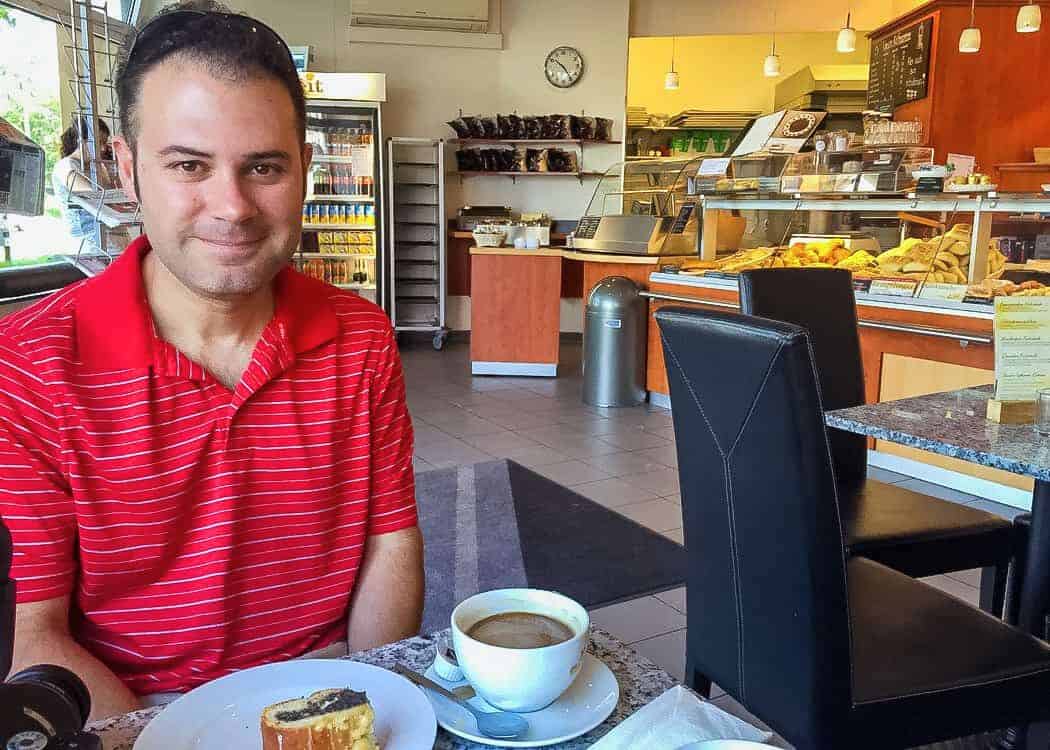
And with so many varieties to choose from, you were bound to find one (or six!) that you love!
That being said, one of my favourites, is Pumpernickel.
Although I don’t have too much trouble finding Pumpernickel in Canada, under the European Union law, authentic Westphalian Pumpernickel can only be made in Germany.
Pumpernickel is a type of dark rye bread, made from a fermented sourdough starter.

This gives the bread a bit of a tangy taste, as well as contributes to its health benefits.
The reason pumpernickel tastes different from rye bread is that traditional German bread is slowly baked for up to 24 hours at a low temperature.
This results in a sweet, dark chocolate or coffee-flavoured bread, with a gorgeous dark brown colour.
18. Brezeln
Bretzel, or soft pretzels, are sold in pretty much every bakery in Germany.
In fact, you will even find fantastic-tasting bretzel sold in convenience stores in the train stations.
They are, without a doubt, one of our family’s favourite foods to eat while in Germany.

Traditional Bavarian Brezel are made by twisting a long strip of dough into a knot, then boiling the dough.
The dough is then dipped in a lye solution before baking. This process produces a nice, crispy brown exterior, with a super-soft interior.

Best while fresh, a Bretzel is often served covered in cheese or paired with mustard.
However, they are most commonly served split and filled with butter alone, or with butter and Schnittlauch (chives). Deelish!
19. Leberwurst
Leberwurst, or liver sausage, is a spicy German sausage consisting of a combination of ground pork liver, onions, and spices.
There are different varieties of Leberwurst, however, all are spreadable and can be consumed uncooked. The consistency of Leberwurst is similar to pattée.
Leberwurst is traditionally enjoyed alongside sauerkraut.
However, it is also commonly eaten in sandwiches, where the Leberwurst is spread on bread and paired with cheese, mustard, and pickles.
The sausage is popular not just in Germany and Austria, but in many other countries such as Slovenia, Serbia, and Romania.
Easily found in Canada, my kids and I still regularly enjoy this for lunch in place of cold cuts, and spread on a nice piece of German rye bread!
20. Kartoffelknödel
Germans absolutely love their potatoes!
Kartoffelknödel are traditional German potato dumplings.
So it’s not really a surprise that Kartoffelknödel are a common side dish to any meal.
Also called Klöße, these dumplings are boiled, and come in a variety of sizes, depending on which restaurant you visit.
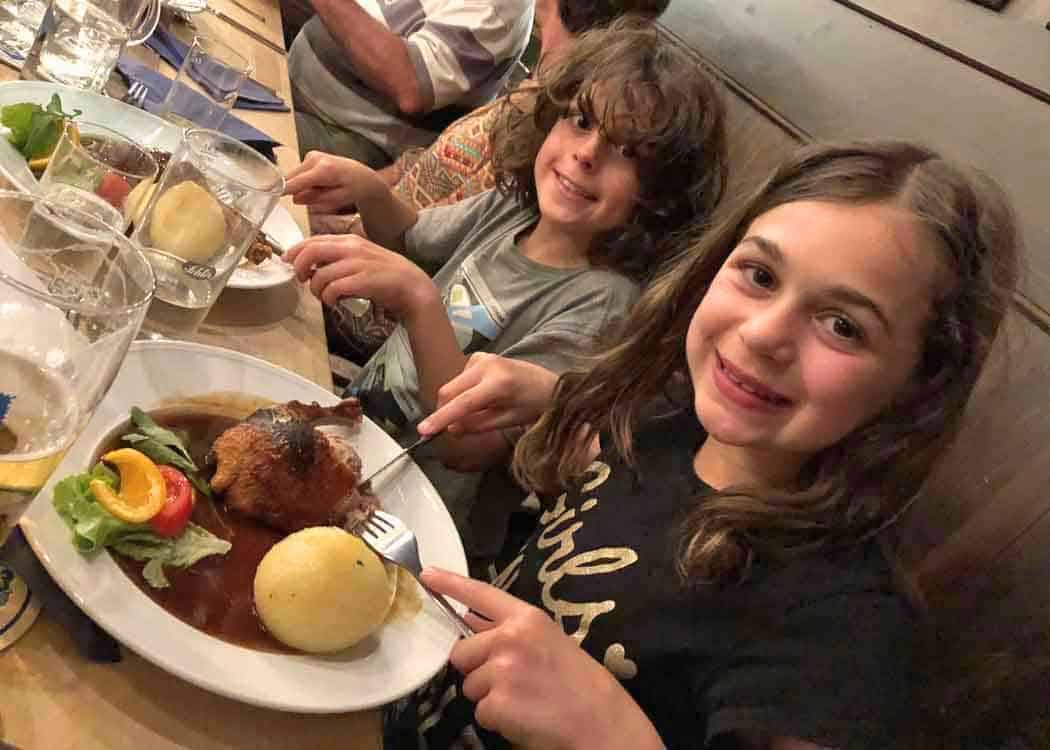
These dumplings are made from cooked or raw potatoes, beaten eggs, potato starch, cornstarch or flour, and herbs such as chives or parsley.
Popular in Bavaria, Thuringia, and the Rhineland area, some Knödel are also stuffed with croutons, sauerkraut, or ham.
21. Semmelknödel
Semmelknödel are traditional German bread dumplings.
This type of dumpling is commonly served in the southern regions of Germany, especially Bavaria.
In our house, Oma always made dumplings with Sauerbraten or with a turkey dinner.
In fact, they are now a permanent part of my family’s Thanksgiving dinners as well.
The dumplings are made from stale bread rolls, known as “Semmel,” which are soaked in milk to soften.
The bread is then mixed with eggs, onions, parsley, and seasonings like nutmeg and pepper to form a dough.
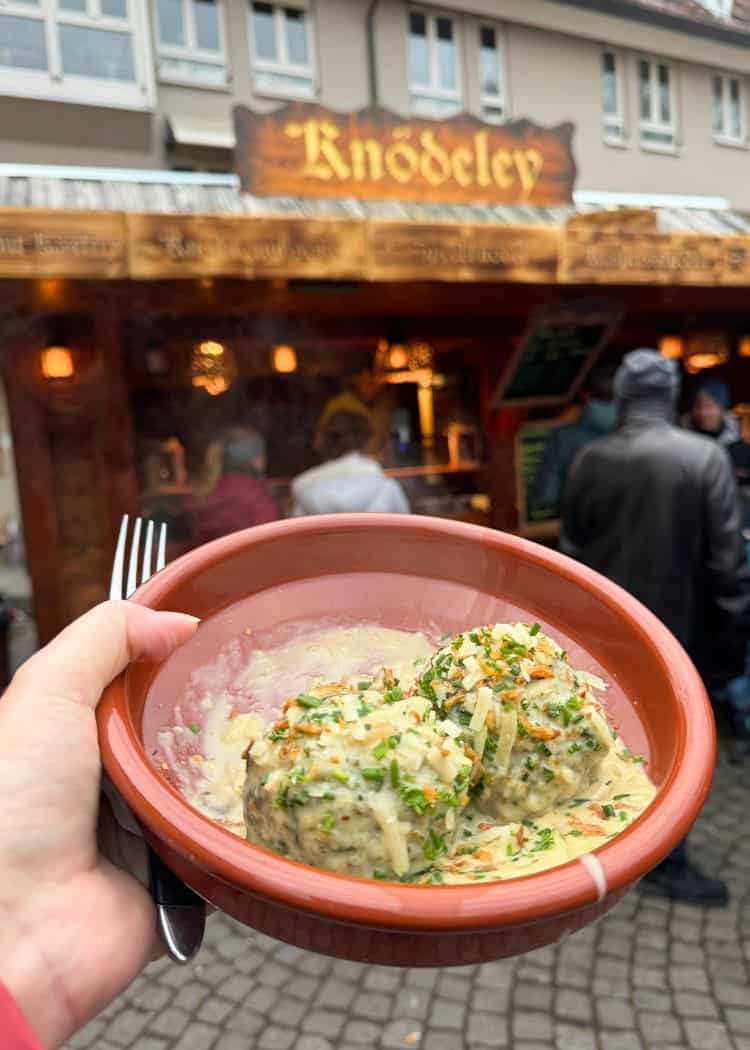
The dough is shaped into large, round dumplings and then boiled in salted water or broth until they are cooked through and have a soft, spongy texture.
Semmelknödel are excellent at absorbing flavours. This makes them a perfect accompaniment to rich, savoury dishes like roasts, stews, and gravies, where they can soak up all the delicious juices.
These dumplings are not only a delicious side dish but also a smart way to use up leftover bread.
This definitely embodies the resourcefulness of traditional German cooking.
In any case, Semmelknödel are a comforting and filling addition to any meal.
22. Sauerkraut
I will say this upfront – Sauerkraut is DEFINITELY an acquired taste!
It wasn’t until adulthood, that I started to actually enjoy eating this German staple.
My kids aren’t there yet, but they definitely inhaled the sauerkraut we found in a small deli in the Munich marketplace!
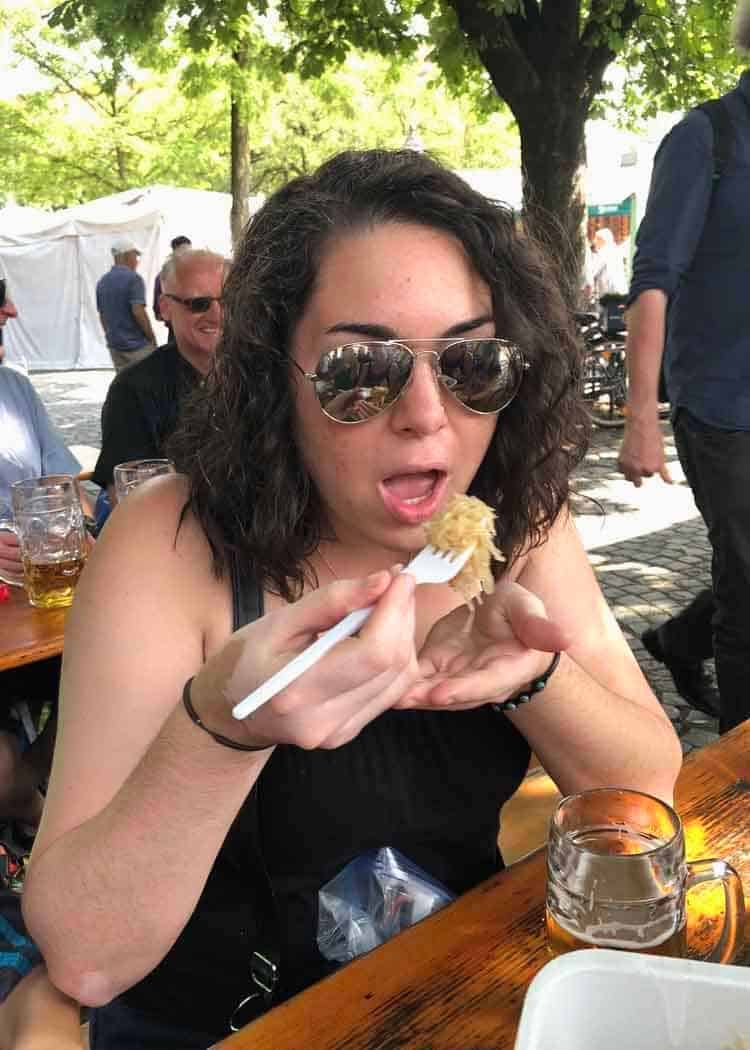
Sauerkraut, or sour fermented cabbage, is served warm and is enjoyed as an accompaniment to meat dishes.
But, it is also found in casseroles and sandwiches.
A good sauerkraut is cooked with a ham hock to give it a rich flavour that you just don’t find in the jarred stuff back home.
Of course, Sauerkraut also has the added benefit of being great for gut health!
24. Fleischsalat
Fleischsalat, or meat salad, actually tastes better than it sounds!
This traditional German salad is made with sliced cold meats, typically bologna or cooked ham, mixed with pickles, onions, and sometimes other vegetables like bell peppers.
The ingredients are bound together with mayonnaise or a mayonnaise yogurt dressing, creating a creamy, tangy salad.
Fleischsalat is often served as a filling for sandwiches, a topping for bread, or simply as a side dish with a hearty German meal.
It’s also pretty popular at delis and for picnics as it’s easy to prepare in advance and very filling.
While not my favourite German food, it really is quite good.
24. Kartoffelsalat
Kartoffelsalat is a traditional German potato salad, that comes from the region of Swabia in Southern Germany.
Unlike the North American potato salad, the German version is not mayonnaise-based.
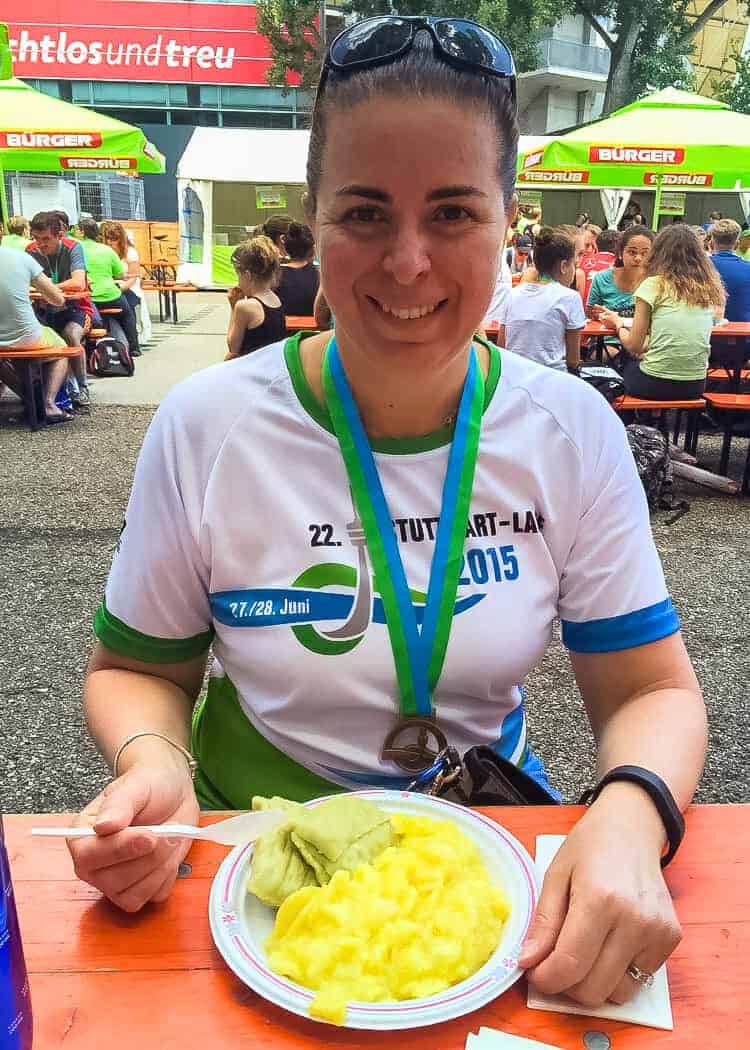
Instead, the German version usually consists of boiled and sliced potatoes, chopped onions, beef broth, white vinegar, oil, mild German mustard, sugar, and pepper.
Swabian potato salad is traditionally garnished with fresh chives and is mostly served alongside German sausages or meat dishes.
25. Spargel
From April to late June, you’ll find spargel (asparagus) on every menu.
The white variety, which is only available seasonally, is arguably Germany’s favourite vegetable!
The asparagus can be boiled or steamed and is served with Hollandaise sauce, melted butter or olive oil.
In restaurants, you will find it wrapped in bacon, piled on schnitzel, made into a cream soup, or fried.
The asparagus is also served with savoury pancakes, scrambled eggs or with young potatoes.
My favourite is cream of asparagus soup. It is absolutely incredible!
The taste of the white asparagus is different from the green. You absolutely have to give it a try!
We have only found it a couple of times in Canada, but we are always on the lookout!
Desserts and Sweets – Cake
I definitely have a sweet tooth, so there aren’t very many German desserts that I don’t like.
And seeing as my relatives also enjoyed sweets while I was growing up, the opportunities to try new desserts were plentiful!
26. Apfelkuchen
This traditional apple cake is a favourite German dessert.
Unlike the apple strudel, the cake features a dense, buttery crust, and is topped with sliced or diced apples.
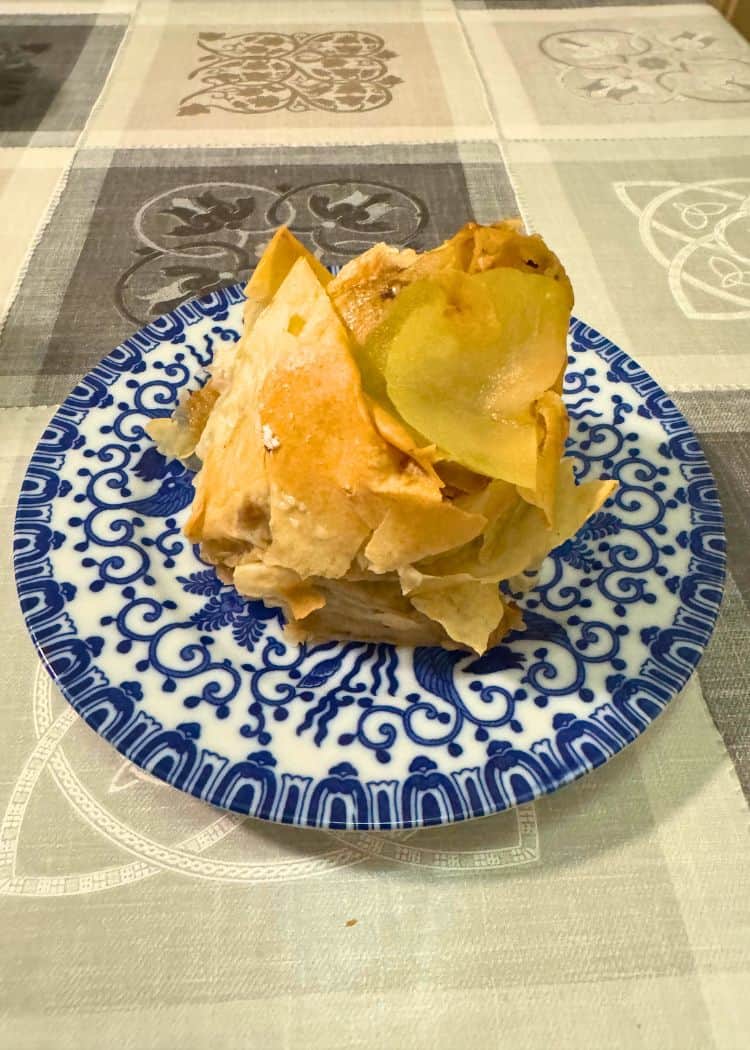
Depending on the region where it is served, the cake will either be dusted with cinnamon sugar, covered in crumbly streusel, or blanketed in vanilla-flavoured custard.
And don’t worry, any of these options are completely delicious!
Apfelkuchen is usually enjoyed as a filling afternoon dessert, during Kaffee und Kuchen time (more on that later)!
27. Apfel Strudel
Unlike Apfelkuchen, Apfel Strudel is much lighter.
It consists of a buttery, flaky pastry, filled with apples, and flavoured with sugar, cinnamon, and raisins.
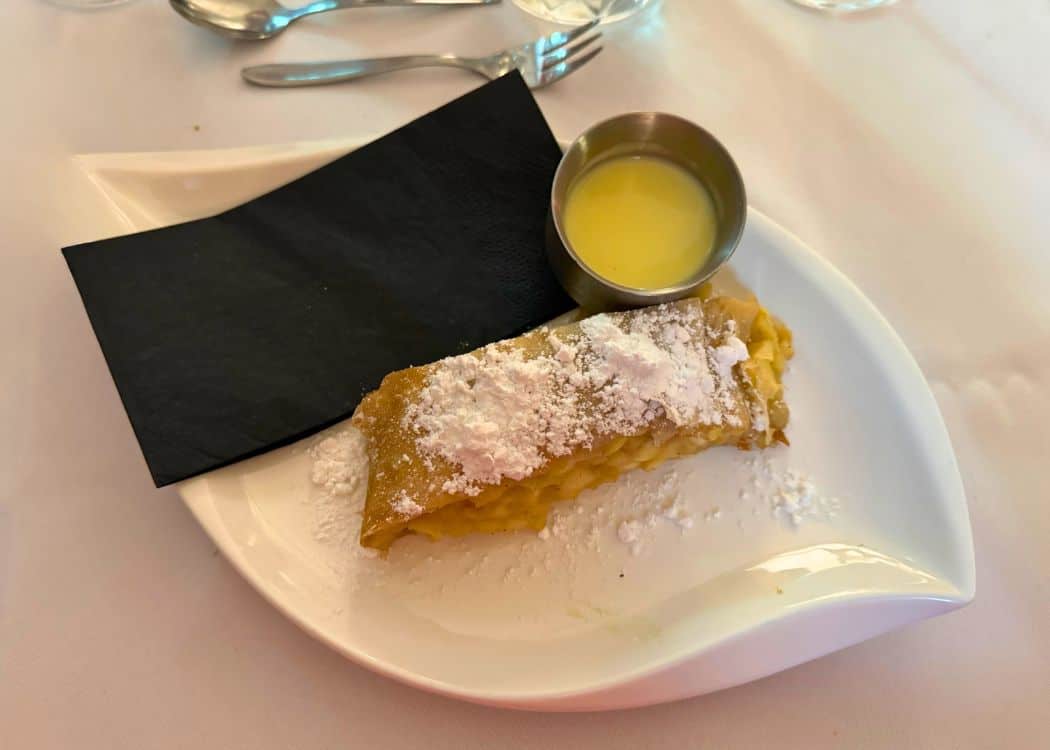
Apfel Strudel is served dusted with powdered sugar and then topped with vanilla ice cream or vanilla sauce.
28. Schwarzwälder Kirschtorte
Schwarzwälder Kirschtorte, or Black Forest cake, is a sinfully delicious tort that originates from the southwest region of Germany, the Black Forest.
This popular German dessert features layers of chocolate cake, whipped cream, and cherries.
The cake is then lavishly topped with more whipped cream, chocolate shavings and cherries.

But what sets apart the Schwarzwälder Kirschtorte is that it is lightly flavoured with cherry brandy!
The cake is not at all boozy-tasting and is often enjoyed during Kaffee und Kuchen.
Growing up, this was the ONLY cake I wanted for my birthday! Yummy!
🍰 Fun Fact: In order for the cake to be considered a true German Black Forest Cake, it must be made with a special Schwarzwälder Kirschwasser (Black Forest cherry brandy). The brandy is either brushed on the cake layers, mixed in with the whipped cream, or the cherries can be soaked in the brandy.
29. Käsekuchen
German-style cheesecake consists of a thin layer of shortcrust pastry, topped off with a creamy combination of quark cheese, eggs, and various fruit.
A truly authentic German cheesecake is light and airy, compared to the heavier North American version.
Käsekuchen is usually dusted with powdered sugar and served at Kaffee and Kuchen time.
Have I mentioned how delicious the Käsekuchen is? If desserts are your thing, this is one you don’t want to miss!
29. Zwetschgenkuchen
As an adult, Zwetschgenkuchen is my favourite German cake.
The cake is made from either a yeast dough or shortcrust dough that is thinly spread onto a baking sheet, and covered with pitted Zwetschgen plums.

The Zwetschgenkuchen is usually served with a heaping scoop of schlagsahne (real whipped cream).
This seasonal treat can be found in bakeries all over Germany. Though, my favourite was found in a little bakery in Ludwigsburg, and was absolutely delicious!
I was thrilled when a German friend of mine shared her Oma’s recipe.
We now make it at home in Canada every summer (using Italian plums).
31. Bienenstic
Bienenstich, or “Bee Sting Cake,” is a famous German dessert.
It’s made from a yeast batter baked into a cake, topped with crunchy caramelized almonds, and filled with a creamy vanilla custard.
The cake gets its unique name from a legend where bakers in the town of Andernach used beehives to fend off raiders. They then celebrated their victory with this cake.
The top of the cake is sweet and sticky, with a layer of almonds that looks a bit like a bee’s stinger—hence the name.
Bienenstich is commonly found in German bakeries and is a favourite for parties and family gatherings.
Its delicious mix of soft cake, crisp almonds, and smooth custard truly is heavenly and a must-try when in Germany.
Unfortunately, I haven’t seen this cake anywhere in Canada.
Desserts and Sweets – Miscellaneous
From cakes to cookies, tortes to ice cream, Germans enjoy their sweets.
And since there are quite a few varieties of popular treats, you will have no problem finding a favourite.
32. Pfeffernüsse
Pfeffernüsse cookies are another traditional German Christmas cookie.
Made with molasses, honey, anise, pepper and seasonal spices, these chewy cookies are glazed in confectioners’ sugar after baking.
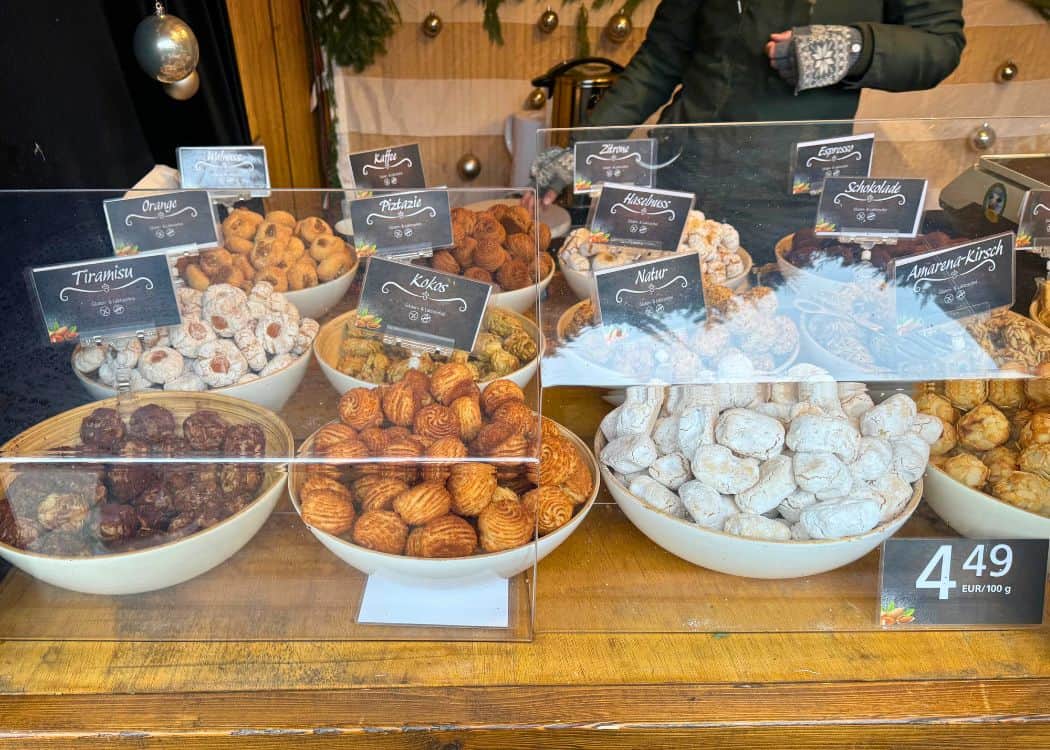
Pfeffernüsse is roughly translated to ‘pepper nuts,’ and refers to the cookies’ spicy taste, as well as the fact that many recipes actually call for almonds or walnuts.
Pferffernüsse cookies differ from German Lebkuchen, in that they are rolled into balls instead of being baked on wafers.
They also tend to be a little more crunchy than Lebkuchen.
33. Ritter Sport
Ritter Sport was always one of my favourite chocolates growing up. And I have to admit, it still is today.
But growing up, you couldn’t find these delicious treats in Canada. So, of course, I consumed copious amounts of Ritter while I was in Germany for the summers!
Ritter chocolate is known for its square shape, vibrant labels, and of course, the iconic snap-open packaging, called the ‘Knick-Pack’.
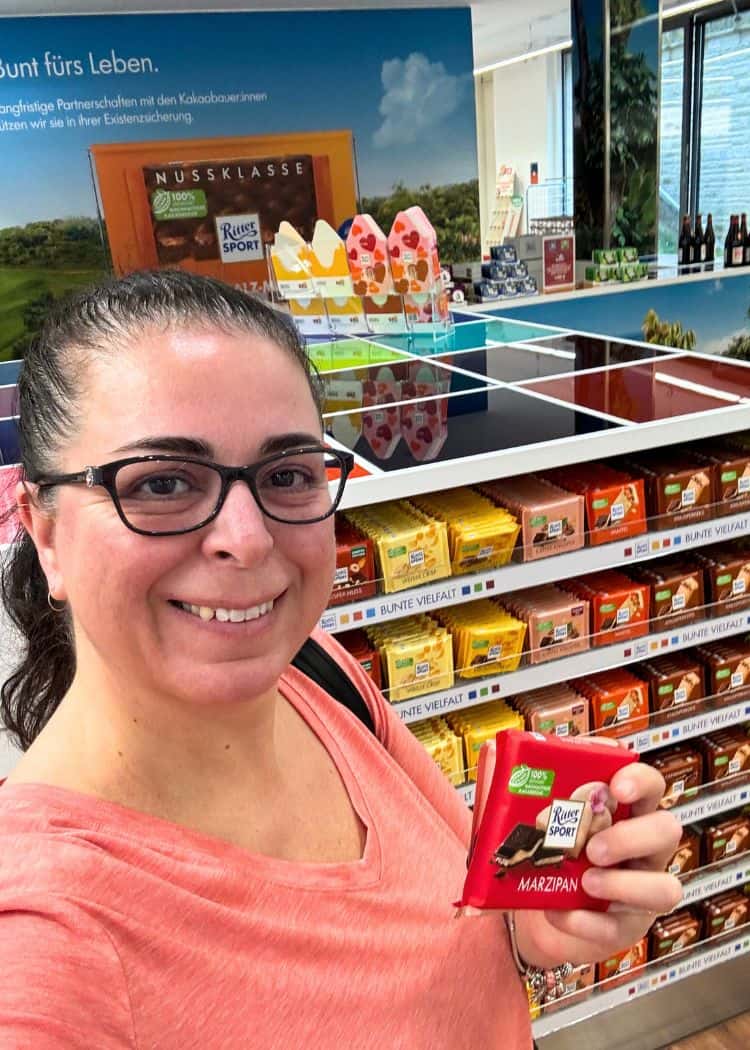
This clever (and patented) packaging allows consumers to fold the bar on a designated line.
This easily opens the wrapper, while leaving a piece of chocolate broken off and ready to eat.
Today, Ritter Sport comes in a HUGE variety of flavours including vegan options.
Ritter Sport chocolate also prides itself on being made from 100% certified sustainably sourced cocoa and carries the Rainforest Alliance seal.
34. Kinder Chocolate
Kinder Chocolate absolutely fills me with nostalgia.
Once again, these sweet treats were not available in Canada. So my German family made sure I was well stocked when I visited as a child!
Available in both bars and eggs, the Kinder Surprise eggs are a definite favourite for kids.

Not only do you get the creamy and delicious layers of white and milk chocolate to enjoy, but you also get a small toy inside.
Created in 1968, the Kinder Chocolate company has always focused on providing small, single-serving chocolates for kids.
Kinder products are individually wrapped, making it easy for kids to open, hold and eat.
Unfortunately, Kinder eggs are still prohibited in the US (due to the toy). For all my American friends, the closest you will get is the Kinder Bueno products. 😢
🍫 Fun Fact: 81% of Kinder products are below 130 calories per piece!
35. Spaghetti Eis
Spaghetti Eis, or spaghetti ice cream, looks just like a plate of spaghetti with tomato sauce!
What it actually is, is vanilla ice cream that has been pressed to look like pasta, and is then topped with a strawberry sauce.
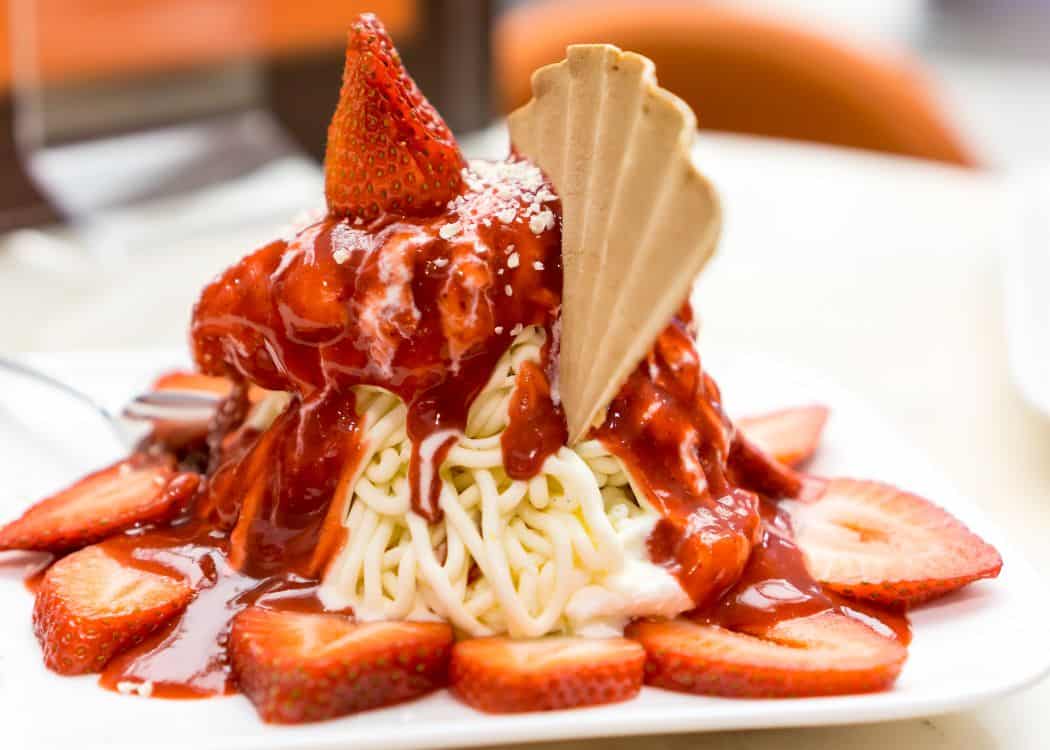
Some places will even add pieces of chocolate to imitate meatballs!
Almost every ice cream shop we went into, all over Germany, offered this interesting-looking treat!
Drinks – Alcoholic
Germans are not just famous for their foods, but there are also some drinks that are pretty popular!
And the fact that the drinking age is much lower in Germany than in Canada (16 or 18 years old compared to 19 years of age here), meant that our teens wanted to taste a little of everything.
36. German Beer
Obviously, we couldn’t put together a list of the best German foods, without mentioning German beer!
When a country puts on an incredible yearly festival to celebrate a certain food, you know that you just have to try it!

Oktoberfest runs each September and celebrates all things beer for around two weeks.
t takes place in September (not October, as the name would suggest) because the weather tends to be warmer and more conducive to outdoor festivities.
Germany is the third biggest beer-drinking country in Europe after the Czech Republic and Austria.

There are many varieties of German beer available, which will please any palate.
From Pale Lagers to Dark Lagers, Wheat Beers and Pilsners, you can also find beverages made from beer and mixers.
🍺 Fun Fact: In 1516, a law known as the ‘purity law’ was established in Germany. This dictated that only three ingredients may go into beer: water, hops and barley. When yeast was discovered, this was added as a fourth-sanctioned ingredient. This law is still in practice today, however, companies producing beer for export, are allowed to add other ingredients.
37. Wine
When most people think about what drinks Germany is known for, they imagine beer!
But did you know that Germany’s climate is actually perfect for producing wine?
German wine is actually quite famous around the world, especially its white wines like Riesling and Gewürztraminer.
These wines are aromatic, range from sweet to dry, and can be easily paired with many types of food.
Germany has several key wine regions like Mosel, Rheingau, and Pfalz.
These areas are known for their beautiful, steep vineyards along rivers.
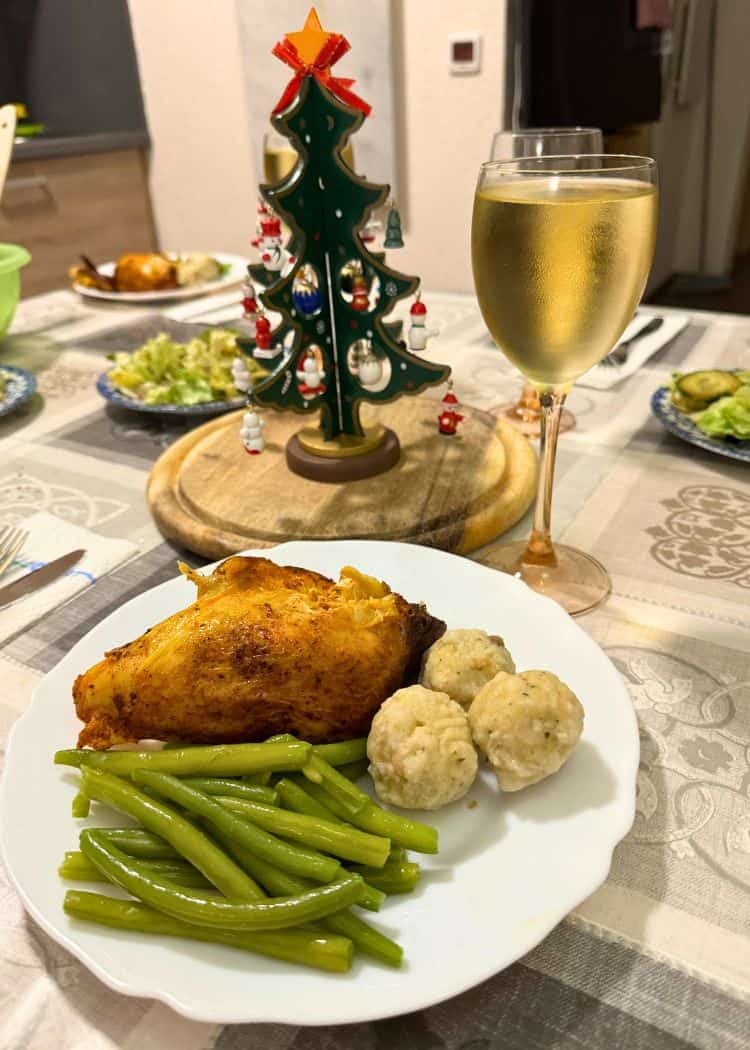
The cool climate in these regions helps the grapes mature slowly, keeping their freshness and developing rich flavours.
Riesling from Germany is particularly well-known for its perfect mix of sweetness and sharpness, which makes it great for drinking on its own or pairing with spicy dishes or hearty meats.
German red wines, like Spätburgunder (Pinot Noir), are also becoming more popular because of their quality and taste.
Winemaking in Germany is a tradition often kept within families and passed down through generations, leading to a high level of care and pride in each bottle.
Like our own Niagara region at home, Germany also produces Eiswein (ice wine) for dessert.
🍷 Fun Fact: There are 13 wine-growing regions in Germany, making it the 8th largest wine-producing country in the world.
38. Schnapps
Schnapps in Germany refers to any kind of strong alcoholic drink.
It’s particularly known for its clean and light flavour. However, unlike the versions you can find in the US, a German schnapps usually isn’t very sweet.
German Schnapps is commonly made from fruit brandy, including apples, pears, cherries, and plums. My favourite is the plum.
Schnapps is also a popular choice for a digestif, enjoyed after meals to aid in digestion.
🍸 Fun Fact: The word “schnapps” comes from the German word “schnappen,” which means to snap, referring to the typical quick, sharp sip one takes of this potent drink.
Drinks – Non-Alcoholic
For something a little lighter, there were several different drinks that were popular in German restaurants.
39. Apfelschorle
Apfelschorle is a favourite drink in my family!
Basically, it’s Germany’s fancy version of apple juice, mixed with sparkling water.

You can actually create other schorles by mixing any fruit juice of your choice with sparkling water.
The resulting drinks are refreshing and much healthier than soda.
40. Mineralwasser
Mineralwasser (mineral water) is a very popular drink in Germany.
This carbonated water is a little on the bitter side but tastes great with a squeeze of lemon.
🫧 Fun Fact: Unlike club soda or seltzer, sparkling mineral water is naturally carbonated. That means its bubbles come from a spring or well with naturally occurring carbonation.
Depending on where the water is sourced from, the mineral content may change the taste significantly.
That’s why different brands of sparkling mineral water often have their own unique taste.
Meal Structure in Germany
Now that you know some of the best German foods you need to try, I thought I would give a little background on how German people eat.
Like most North Americans, Germans eat breakfast, lunch, and dinner.
What those meals look like, however, is different from what we are used to.
Breakfast
Breakfast in Germany, or Frühstück, almost always includes a hot drink such as tea or coffee.
Breakfasts tend to be on the heavier side, unlike what we are accustomed to at home in Canada.
The meal usually starts with some bread or rolls, which are served with spreads such as butter, jam, and marmalade.
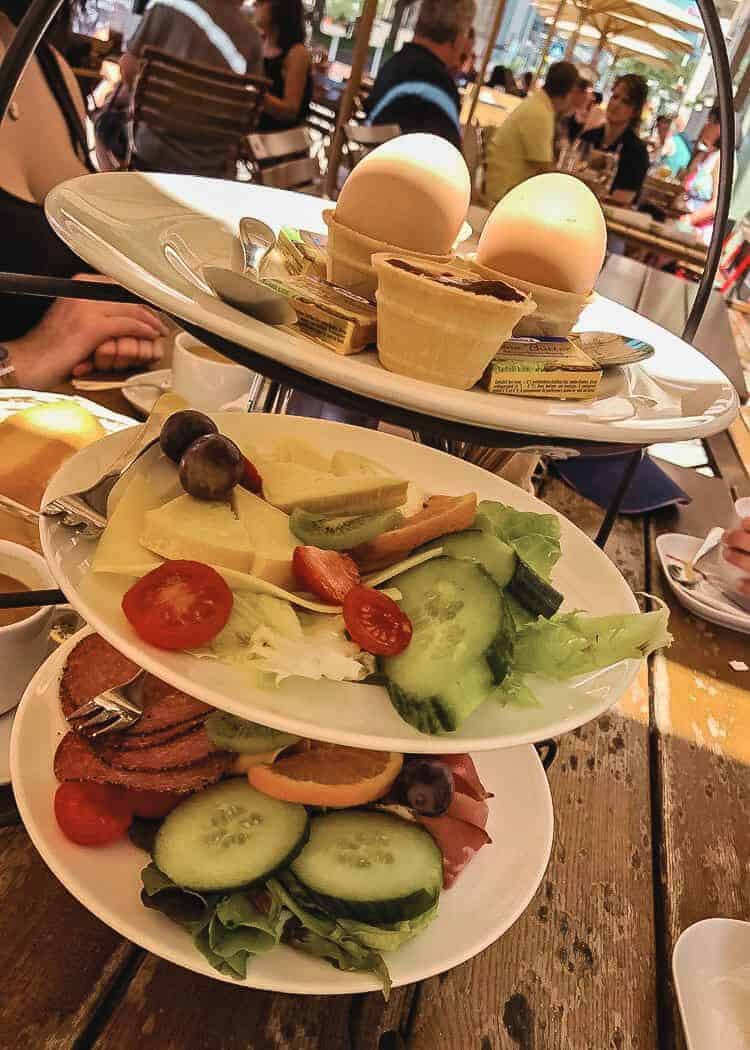
Sausage, eggs, cheese, bacon and potato pancakes are also common breakfast items.
Cereal, especially muesli, or yogurt and fruit are becoming more popular in Germany, especially with the more health-conscious younger generation.
A glass of orange juice rounds out the breakfast.

But Germans don’t stop there! A second breakfast, known as Pausenbrot or a Zweites Frühstück, is common in Germany, especially for students.
This second breakfast is more like a snack and often consists of a small sandwich or some fruit.
Lunch
Lunch, or Mittagessen, is usually eaten between 12 pm and 2 pm.
Traditionally, Germans enjoy their main cooked meal for lunch rather than dinner, though this trend seems to be slowly shifting.
Lunch is always hot, and will usually consist of meat or fish, served with potatoes, rice or German noodles, as well as vegetables and sometimes rolls.

Germans working in the city, or those too busy to go to a restaurant or home for lunch, will often search for hot take-out options, rather than a cold sandwich.
This is why dishes like Currywurst or Schnitzel have become so popular! These foods are hot, readily available, and inexpensive.
Kaffee und Kuchen
Although Germans partake in a large lunch, sometimes after having had a two-tier breakfast, they still look forward to their coffee break!
A couple of hours after lunch, Germans traditionally sit down for coffee and cake (Kaffee und Kuchen).

This was a daily tradition I loved as a child!
Homemade cakes, or fresh pastries from the local bakery, would be served along with a nice cup of coffee.
Even as a young child, I was allowed a cup of coffee, albeit it was decaffeinated with a lot of milk!
Dinner
The last meal of the day is dinner or Abendessen.
This cold buffet-style meal is usually served in the early evening around 6 or 7 pm and is eaten as a family.
Following a hearty lunch, Germans traditionally enjoy a lighter dinner.
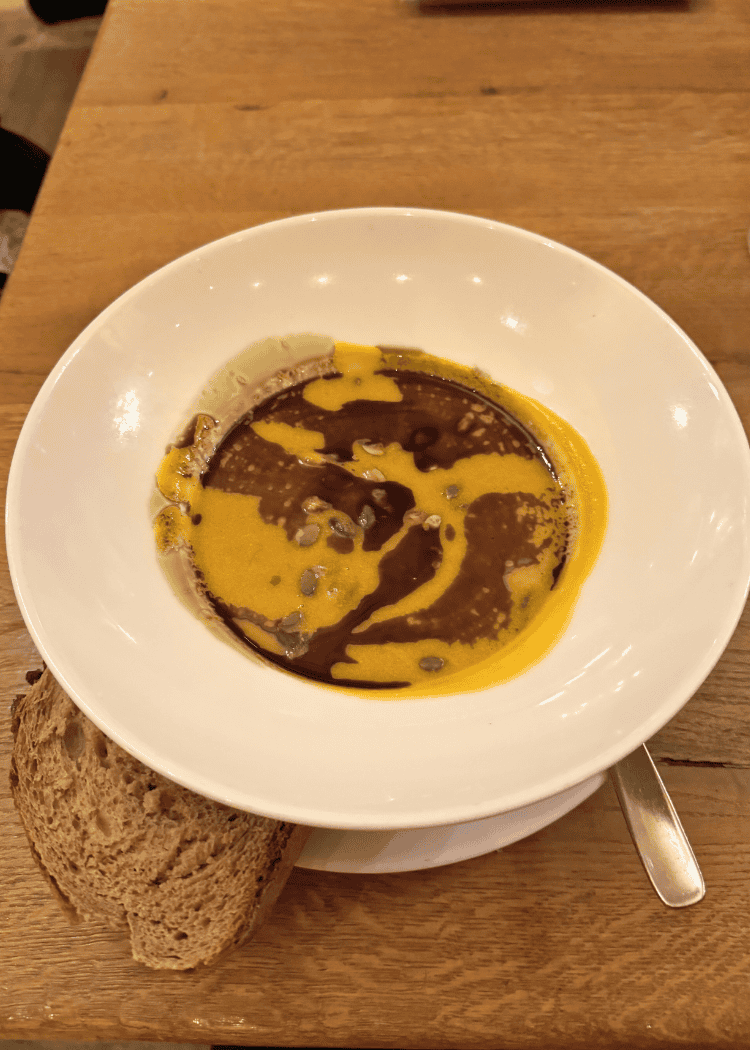
Bread, hams, sausages, cheeses, and pickles are all common choices. In the winter, this may also include soup.
Many adults will enjoy a beer with their evening meal.
Best Traditional German Foods You Need to Try – Final Thoughts
Hungry yet? We would totally understand if you were!
Hopefully, we have tantalized your taste buds, with our list of the best German foods to try.
With so many options, your next trip to Germany should be a tasty one!
Pin This Post for Later!
Related Posts:
- Is Heidelberg Worth Visiting?
- 21 Best Things to Do in Heidelberg with Kids
- Is Dresden Worth Visiting?
- 45 Fun and Interesting Facts About Dresden That You May Not Know
- 13 Awesome Things to Do in Ludwigsburg with Kids
- Is Munich Worth Visiting?
- Ultimate Guide To Visiting The Ritter Sport Museum Waldenbuch
- 21 Things Not To Do In Germany – Expert Advice
- Best Things to Do in Hameln Germany with Kids
